The Medical Science Liaison Career Path: Why No Two MSL Roles Are the Same
Mar 20, 2026The career path of a Medical Science Liaison (MSL) is rarely linear.
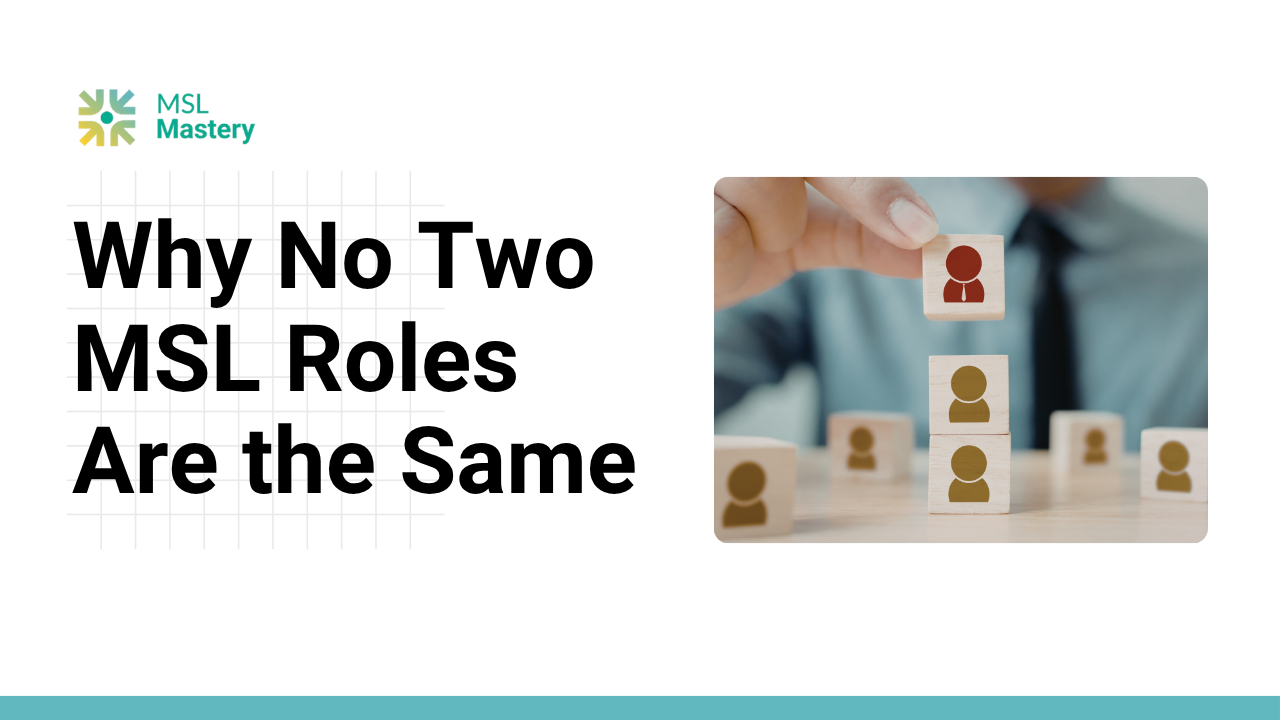
While the title "Medical Science Liaison" may stay the same across organizations, the reality is that the MSL career path can look dramatically different by company, therapeutic area, and stage of product development.
Some Medical Science Liaisons work within large pharmaceutical companies supporting major launches with highly structured field teams. Others join smaller biotech organizations where they help build the medical affairs strategy from the ground up.
In this guest article, Tyler Peters, PhD, shares how the same title can lead to very different experiences and why the MSL role is anything but one-size-fits-all.
The MSL Career Path: Exploring the Diversity of Medical Science Liaison Roles
By Tyler Peters, PhD
For many Medical Science Liaisons early in their careers, the role can begin to feel fairly predictable after the first few years. The title is basically the same across companies, the responsibilities often sound similar, and job descriptions frequently reference the same core activities: thought leader engagement, scientific exchange, and insight gathering.
At some point, typically after a year or so, you meet the initial learning curve and your confidence increases. The imposter syndrome subsides, and suddenly the shiny MSL career that you spilled blood, sweat, and tears to break into loses its luster, and many of us begin asking ourselves a familiar question:
Is this really it? What’s next for me in my career? Trust me, I hear this question so often that I asked MSL Mastery to write an article about it!
It is of my opinion that part of what drives this question is the transition many of us make when entering industry. MSLs come from highly structured academic or clinical training backgrounds. As terminal degree holders, whether PhD, PharmD, or MD, we are accustomed to clear milestones and indicators of success: complete the coursework, pass the exam, defend the dissertation, graduate, and move to the “next step”.
Industry, however, operates very differently. Once in the field, career development becomes far less prescriptive and almost entirely self-directed. For many newer MSLs, navigating this shift can feel very confusing.
Without a clearly defined development plan and a manager who truly has your best interests in mind, it is easy to assume that the only path forward is to eventually leave the field and pursue “more strategic” internal roles such as Field Director or Associate Medical Director.
While those paths can certainly be rewarding, what many junior MSLs may not realize is that the field role itself can look dramatically different depending on the environment in which you work. Exposure to new environments comes with unique challenges and opportunities that inevitably push MSLs to develop new skills, increase their business acumen, and expand the scope of their professional capabilities.
What the MSL Career Path Really Looks Like: Examples From My Own Journey
Over the course of my career, I've had the opportunity to work across a large pharmaceutical company, a mid-sized organization, and a small biotech company with less than 300 employees. Each role has offered an entirely different MSL experience, shaped by company structure, culture, and the science being advanced.
In one position, I managed a portfolio of more than three hundred physicians across 3 therapeutic areas. In another, I began as a therapeutic MSL supporting the launch of the first fully FDA-approved disease-modifying therapy (DMT) for Alzheimer's disease before eventually pivoting into the diagnostic testing space.
Along the way, I have delivered podium presentations to large audiences at regional programs, led MSL teams through multiple national conferences, and formally trained an entire MSL team.
Beyond traditional field engagement, the role has also exposed me to opportunities that extend well beyond what many would consider a typical MSL job description. I have worked one-on-one with Medical Directors on pre-launch strategy, supported patient advocacy initiatives and commercial training programs, and helped execute a cross-functional payer initiative alongside a company's medical outcomes team.
Most recently, I joined a company's first-ever Neurology MSL team, where I now collaborate closely with senior executives across commercial, marketing, patient services, and medical affairs, to help build elements of field team infrastructure and strategy from the ground up.
These experiences are not meant to be boastful, but rather illustrative. They serve as a reminder that the MSL role can open doors to a wide range of opportunities, many of which extend far beyond the initial scientific exchange and insight gathering activities we all start out with following field certification.
If you take one thing away from this article, I hope I can convince you that the MSL role can take on many different forms if you look for these opportunities, adopt a growth mindset, and dedicate yourself to MSL mastery.
Key Factors That Shape the MSL Career Path: The Science Behind the Role
One of the more obvious factors shaping the MSL experience is the type of therapy being supported and where it sits within its lifecycle. Even within a single therapeutic area, the nature of field engagement can vary significantly depending on the novelty of the science behind the therapy.
For example, within neurology I have supported both symptomatic therapies and DMTs, each requiring very different conversations with healthcare providers. At the time I began supporting a DMT, the clinicians I worked with were more accustomed to symptomatic treatments where improvement can be observed by patients relatively quickly and measured objectively in the clinic.
Disease-modifying therapies introduce a different dynamic. Rather than producing noticeable improvement, these treatments are designed to slow disease progression. As a result, their clinical impact can be difficult to perceive, and often relies on interpreting longitudinal data and translating clinical trial outcomes into clinical meaningfulness.
There are dozens of scenarios I could describe where the variation of the therapeutic modalities themselves leads to highly nuanced scientific exchanges. Over time, I have gained experience supporting small molecules, antibodies, a digital device, and gene therapy. All these treatments came with a different mechanism of action, patient population, routes of administration, safety monitoring protocols, and some of them even had multiple formulations that came to market.
The stage of the product lifecycle also shapes HCP conversations immensely. Early in development, conversations may center on disease education and emerging science. Pre-launch engagement often focuses on understanding clinical practice patterns and preparing treatment centers for the commercialization of a new therapy. After launch, discussions shift toward real-world experience, evolving clinical data, and patient identification. HCPs begin to develop new questions, opinions, and objections that MSLs must address as therapies move through their life cycle.
As a result, two MSLs working within the same therapeutic area may have very different day-to-day experiences depending on the therapy they support and its phase of development. But beyond the science and product life cycle, the size and structure of the company itself can also significantly shape the influence, the scope, and the responsibilities of the MSL role.
How Company Size Changes the MSL Role
MSL Roles in Large Pharmaceutical Companies: Structure, Resources, and Scale
Large pharmaceutical companies typically have well-established field medical organizations with mature infrastructure, defined processes, and extensive internal resources. For many MSLs, this environment serves as an excellent foundation early in their careers.
Roles and responsibilities are often clearly and narrowly defined. MSLs typically focus on scientific exchange, gathering field insights, and supporting medical education. Other specialized functions are managed by dedicated internal teams, as large pharma companies may have multiple stakeholders assigned to support different aspects of a single product.
It can certainly feel like there are "too many cooks in the kitchen" at times. While big companies bring significant resources and expertise, this may come with challenges in cross-functional collaboration when teams operate within distinct functional silos.
Large organizations also provide significant operational support. Medical information teams, HEOR/real-world data groups, and often more rigid compliance frameworks contribute to a highly structured environment. Introducing even small changes to procedures and policies can require navigating multiple layers of leadership, which can make progress feel slower as decisions move through established processes.
In my opinion, the biggest upside to working for a large company is that they often have increased capital to invest in MSL training programs. Working in this setting can help new MSLs develop strong foundations in territory planning, scientific communication, and most critical of all, soft skills (aka the art of MSL-ing). It also provides valuable insight into how global companies operate and execute medical strategy at scale.
MSL Roles in Mid-Size Pharma Companies: Agility and Expanding Scope
Mid-sized pharmaceutical and biotech companies often operate in a transitional stage; they are larger than startups, but often still evolving their medical affairs infrastructure. In these environments, the MSL role often expands beyond traditional field engagement.
With smaller teams and fewer layers of hierarchy, MSLs may have greater visibility across the medical affairs organization, and field insights can rapidly shape internal discussions around medical strategy, educational initiatives, or territory development.
Cross-functional collaboration is often more visible as well. MSLs may work closely with real-world evidence and HEOR, clinical development teams, patient advocacy, and other internal stakeholders as organizations refine how they engage with the medical community. The increased visibility across functions can also create greater access to opportunities such as supporting advisory boards, contributing to poster authorship, and facilitating formal preceptorships.
Because processes and policies may still be evolving, MSLs often have greater autonomy in how they develop their territories and engage with thought leaders. For example, our MSL team had identified an educational gap and we collaborated directly with our medical director to develop a targeted scientific program to address it. I found that the mid-size company environment helped me foster growth in strategic thinking, independence, and cross-functional awareness.
However, greater flexibility can also come with greater ambiguity. Mid-sized organizations may have fewer established processes and fewer internal resources than large pharmaceutical companies, requiring MSLs to adapt quickly as priorities change. On top of that, medical affairs may still be attempting to secure their seat at the table, and KPIs rapidly fluctuate at times as the organization refines its view of how field medical creates value.
MSL Roles in Small Biotech Companies: Entrepreneurship in Field Medical
Small biotechnology companies often operate with very lean teams and limited infrastructure, particularly when supporting early-stage or first-in-class therapies. In these environments, the MSL role can become significantly broader and more dynamic.
With smaller field teams, MSLs frequently wear multiple hats. In addition to engaging healthcare professionals, they may contribute to shaping territory strategy, identifying emerging treatment centers, or helping establish how field medical engagement should evolve.
Because organizations are smaller, the distance between the field and upper leadership is often much shorter. It's not uncommon to have conversations with the CEO at corporate events! Field insights may reach senior leadership quickly, and MSLs may interact more directly with VP-level stakeholders across multiple functions, not just within medical affairs.
Another defining aspect of small biotech environments is the opportunity to build relationships from the ground up. In early-stage programs or pre-launch settings, companies may not yet have an established presence within many treatment centers. MSLs can play a key role in initiating that first contact, understanding referral pathways, identifying emerging experts, and building trust with clinicians long before a therapy becomes widely available. These organizations are also frequently advancing novel or transformative therapies, which can create particularly satisfying and engaging scientific discussions with thought leaders.
While this environment can be exciting, it also presents unique challenges. Resources may be limited, processes may still be developing, and clinical programs themselves may carry inherent regulatory uncertainty. Corporate benefits packages may lag behind the industry titans, and job security can feel like it changes from week to week depending on company progress. Yet for MSLs who enjoy building a team from the ground up, problem-solving, and discussing cutting-edge science, the experience can be incredibly rewarding.
The MSL Role Career Path Is a Journey, Not a Ladder
It's important to emphasize that this article is not meant to suggest that every MSL should begin in large pharma and ultimately end up in small biotech. These environments are not steps on a career ladder, and there is no single "end goal" within the MSL profession. I know some MSLs who've stayed with the same organization for over 10 years and never plan on leaving. In the end, each environment offers different opportunities for growth and impact.
Personally, I never imagined that my career would eventually lead me to a small biotech organization supporting an innovative gene therapy. But that unpredictability is part of what makes the MSL role so unique, and every day is a learning process.
Final Thoughts on the MSL Career Path
For MSLs early in their careers, the key takeaway is that the role itself is far more dynamic than it may initially appear. The title may stay the same, but the experiences behind it can vary tremendously, and sometimes the most rewarding opportunities emerge in places you never expected.
There is a reason the MSL role is often described as one of the best positions in the industry. The opportunity to influence scientific strategy and lead both upward and across the organization is immense.
If you're a new MSL beginning to feel like the role is getting a bit stale, my advice is simple: stay curious and stick with it! The diversity of experiences and opportunities will unfold over time, and it's incredibly satisfying to look back and realize how far your journey has taken you.
Subscribe to the Medical Affairs Newsletter That Will Make You Strategic
Get practical Medical Affairs tips on communication, AI, storytelling, proving impact, and more in your inbox every Friday morning 🎯