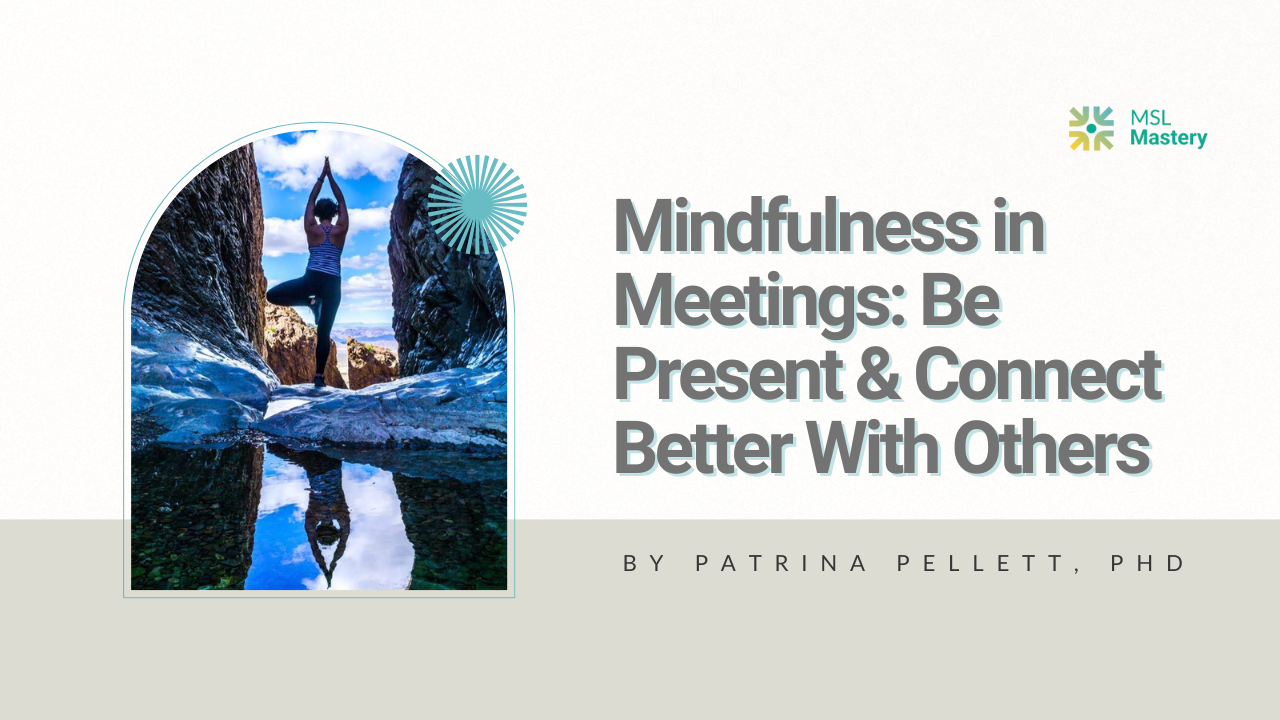
Mindfulness in Meetings: Why Presence Is a Leadership Skill (Whether You Realize It or Not)
Feb 06, 2026By Patrina Pellett, PhD (Follow me on LinkedIn)
It’s hard not to be distracted in meetings. People are often distracted within the first few seconds.
Whether you’re in person, on Zoom, or grabbing 5 minutes between sessions, there’s always something pulling your attention elsewhere. Notifications. Email. That little voice telling you to “just check one thing.”
What’s rarely talked about is how much this actually erodes trust and how quickly the other person feels it.
This shows up everywhere. For aspiring MSLs trying to break into the role. For experienced MSLs building credibility with KOLs. And for Medical leaders trying to align, motivate, and support their teams.
How present you are in meetings is one of the clearest signals of leadership, even if you don’t think of yourself as a “leader” yet.
This article unpacks why distraction does more damage than most people realize, how presence quietly shapes relationships, and a few practical ways to show up more intentionally in the conversations that matter most.
Mindfulness in Meetings: Why Presence Is a Leadership Skill
When Presence Is Missing, People Pull Back Relationship Building
When I was a field applications scientist, I had a boss I loved. She was an amazing manager and I craved her attention. Because we were a field team, I didn’t see her often (we talked once a month or so and met in-person every few months). Occasionally, she’d join me for customer dinners or field visits, which were exciting because we would get to hang out.
During one dinner, mid-conversation, she pulled out her phone. The energy shifted immediately. The conversation stalled. I glanced over and noticed she was scrolling Facebook.
I was crushed.
It felt like our time didn’t matter. And even though nothing was said in the moment, something changed. I pulled back.
That was over a decade ago, and I still remember it clearly.
That’s the thing about presence. When it’s missing, people feel it instantly and they remember it.
When someone isn’t present, it:
-
Feels dismissive, even if that’s not the intention
-
Erodes trust
-
Makes interactions feel transactional
-
Reduces psychological safety
-
Shuts down honest sharing
-
Leads to missed insights and miscommunication
This is why presence isn’t just a “nice to have.”
It directly affects the quality of your relationships.
Presence Is a Leadership Behavior (Not a Personality Trait)
Leadership doesn’t just show up in big moments. It shows up in everyday interactions.
This is something we see again and again in LEAP, our leadership program for Medical Affairs professionals. The people who struggle with influence aren’t lacking expertise. They’re struggling to stay present, especially when conversations feel complex or uncomfortable.
Presence sends powerful signals:
-
It tells people they’re safe to be honest
-
It creates space for deeper discussion
-
It builds trust without forcing it
That’s not mindfulness as a trend. That’s leadership in action.
Here are some ways to be more mindful and present during your meetings to connect with others on a deeper level.
3 Ways to Be More Present in Meetings
1. Get rid of distractions
When you check your phone or glance at email, even briefly, people notice. When you don’t, they notice that too. Commit to being fully present for the meeting, no multitasking, no “half listening.” Attention is one of the clearest ways we show respect.
I really struggle with this. I noticed my brain getting all itchy to check my phone or email and I have to work really hard to resist. I think about how I want to give the other people in the meeting the gift of my attention. Here are some smartphone habits I implemented that have helped me create better boundaries and resist the temptations of technology!
2. Make the meeting shorter
Attention spans are short. Instead of trying to fight it, make the meeting shorter. It's a win-win because everyone likes shorter meetings anyway! Make the meeting 30 minutes instead of 60. It makes you stay on task.
3. Train Your Brain
Presence is a skill you can build.
Meditation is one way to practice noticing when your attention drifts and bringing it back. That’s the same muscle you use when your mind wanders in a meeting. You don’t need a perfect routine, just consistency. It's another way to invest in yourself.
Why 1:1 Meetings Matter Most
If you want a fast read on how present you are, look at your 1:1s.
This is where distraction is most obvious and doesn't the most damage. 1:1 meetings are where trust is built, concerns surface, and insights emerge.
If you want to have meetings people look forward to check out our 1:1 Meeting Mastery 60-min workshop. It’s designed to help Medical Affairs professionals stay engaged, ask better questions, and build trust through a structured approach to meetings.
Because leadership doesn’t show up in theory. It shows up one conversation at a time.
Conclusions: Mindfulness in Meetings Be Present And Connect Better With Others
Make relationships better by actually being present. Be the person who doesn't get on his/her phone in the meeting.
Be the person who:
-
Doesn’t reach for their phone during conversations.
-
Pays attention the whole time.
-
Makes others feel valued and genuinely heard.
Subscribe to the Medical Affairs Newsletter That Will Make You Strategic
Get practical Medical Affairs tips on communication, AI, storytelling, proving impact, and more in your inbox every Friday morning 🎯